2026 Extended Reality Legal Primer: Risk, Regulation, and Strategy

1000 648 David B. Hoppe

Extended reality (XR) is no longer experimental. Across industries, mixed, augmented, and virtual reality are becoming core operational infrastructure, guiding how companies’ user engagement, digital asset deployment, and value generation inside decentralized ecosystems. That momentum is unmistakable. So is the legal uncertainty it creates.

XR, augmented, virtual, and mixed reality, integrates immersive computing, biometrics, AI, and Web3 to access enormous commercial upside. Regulatory ambiguity, incomplete legal standards, unsettled enforcement models, and novel risk profiles, however, demand regulatory rigor and legal foresight. For companies building in this space, complacency is not an option.

Web3-native organizations must pay heed. The pressure points are already visible: data privacy, biometric collection, intellectual property ownership, platform liability, jurisdictional exposure, and financial regulation. Courts and regulators are actively testing how legacy laws apply to technologies that collapse the boundary between the physical and digital worlds. Those who understand the terrain can innovate with confidence. Those who don’t will learn the hard way.

Data and Biometrics – The Privacy Frontier

Mixed reality does more than observe users. It senses movements, continuously mapping bodies, behaviors, environments, and emotional responses to render immersive experiences. Eye tracking reveals attention, cognitive load, and emotional reaction through gaze patterns and pupil dilation. Skeletal and motion tracking capture posture, gait, and gesture. Environmental scanning reconstructs homes, offices, and private spaces into detailed 3D models. Behavioral analytics infer identity from reactions, interactions, and movement, activities that often identify “anonymous” users as reliably as a fingerprint.

As hardware evolves, physiological monitoring will follow. Heart rate, electrodermal activity, stress indicators, and arousal signals are already on the roadmap. Together, these data streams form detailed, individual profiles that go far beyond traditional personal data. That capability is powerful. It is also legally volatile.

Regulations like Europe’s GDPR and California’s CCPA/CPRA attempt to govern biometric information, but XR pushes their definitions to the edge. Regulators have not yet drawn clear lines. Companies are left navigating ambiguity, with meaningful compliance risk on both sides of every decision.

Consent and transparency sound simple until you try to explain XR data collection in a pop-up window. With website terms of service agreements, users often scroll without reading and click the “I agree” box. It’s different for sites collecting sensitive data. Consent must be specific, informed, and freely given, and bundled consent is increasingly considered invalid. Meaningful consent requires understanding. XR’s scope, precision, and speed defy easy disclosure. The temptation to monetize biometric insights, particularly for advertising, will be strong. The downside is obvious. A breach in this environment exposes data; it exposes physical spaces, behavioral patterns, and emotional signatures ripe for exploitation.
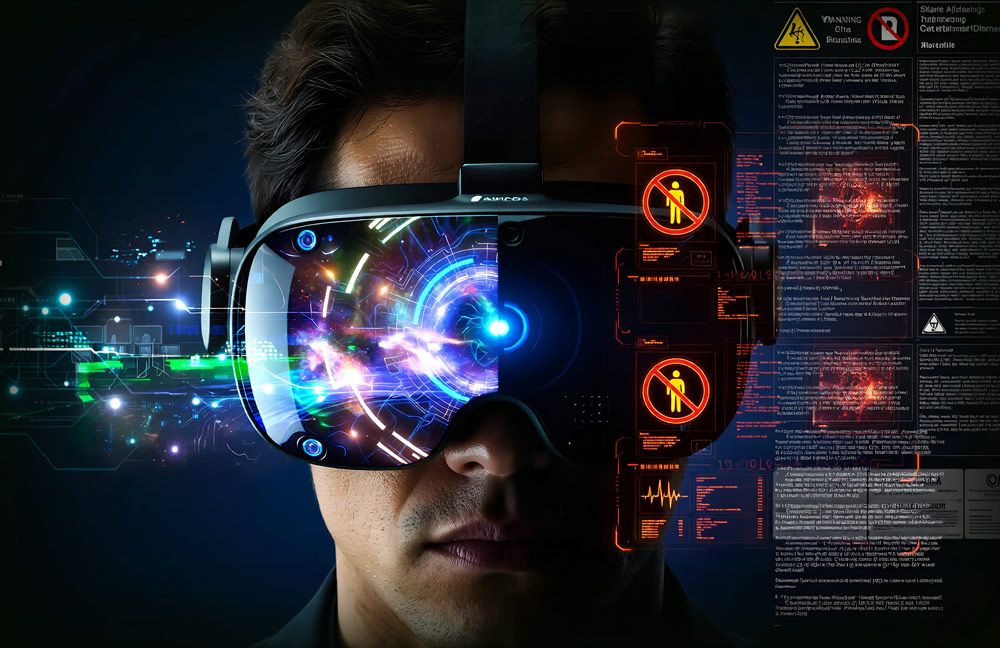
In virtual worlds, users design objects, customize avatars, and build environments. Those same tools make it easy to counterfeit copyrighted works, trademarked designs, and branded virtual goods. Digital fashion, 3D art, and premium collectibles can be duplicated and resold across decentralized networks in seconds.

Enforcement struggles to keep pace, especially when platforms operate through distributed nodes or DAOs. Though Section 230 shapes how platforms handle user‑generated content, it presumes a centralized service capable of receiving notices and exercising control. In decentralized XR environments, that prerequisite disappears, leaving courts with no entity to serve, no administrator to compel, and no practical way to enforce trademark rights. With no central operator, there’s no obvious target for takedown notices or injunctions. Trademark law becomes difficult to apply when infringement happens in a persistent, borderless, user-generated world.

Copyright law is just as tricky. XR experiences are dynamic, shaped by user behavior, AI-generated elements, and real-time environmental inputs. Who owns a recording of an XR session that captures not only one user’s actions, but the creations and interactions of others? The law is ambiguous

XR collapses the boundary between digital experience and physical consequence. When something breaks, liability questions follow quickly, and clear-cut answers are rare.

If an AR overlay obscures a road hazard and causes a crash, who is responsible? If a user trips while immersed in a headset experience, where does the fault lie? The platform? The content creator? The hardware manufacturer? XR depends on layered systems, each contributing to the experience. Assigning responsibility becomes a legal puzzle with no settled solution.

Psychological harm adds another layer. Reports of harassment, stalking, and simulated assault in immersive environments are increasing. As haptics and realism improve, these experiences feel less virtual and more personal. Courts will be forced to confront how real-world tort principles apply to virtual acts that cause tangible harm.

Platforms often rely on broad terms of service and liability disclaimers. Those protections have limits. Courts may disregard them in cases involving gross negligence or intentional misconduct. Product liability doctrines also loom large. If an XR application triggers seizures, vertigo, or disorientation that leads to injury, traditional defective product rules may apply—raising the same question again: which party pays?

XR platforms are often global by design. A single interaction might involve users on three continents, servers in a fourth, and governance spread across a decentralized network. That simultaneity is XR’s strength and its regulatory nightmare.

Which law governs a contract formed inside a virtual world? Which court has authority over harassment or virtual torts? Which regulator investigates a privacy violation spanning multiple jurisdictions? Traditional concepts like territoriality and place of harm strain under XR’s architecture, and courts have yet to establish consistent rules for jurisdictional nexus.

Regulatory approaches diverge sharply. The EU’s Digital Services Act imposes stringent content and transparency obligations. China tightly controls virtual identities and behavior. The United States relies on a patchwork of state privacy and consumer protection laws. Meanwhile, governments race to regulate AI, biometrics, and digital assets, often without explicitly addressing XR.

Decentralized governance complicates enforcement further. When a DAO runs an XR environment, no legal entity, headquarters, or management may be identifiable. Who do regulators prosecute? How do you enforce an order against a protocol spread across thousands of nodes? These questions remain largely unanswered.

Until clarity emerges, jurisdictional strategy matters. Regulatory arbitrage will play a role. Over time, however, major platforms are likely to align with the strictest regimes they face. Early test cases will define authority. They will weigh user location, platform operations, and even the physical location of network infrastructure.

Property and Finance: Value Inside Virtual Economies

XR platforms are evolving into real economies. Users buy land, trade assets, operate businesses, and earn income. The absence of clear statutory frameworks creates a vacuum that private contracts fill to govern most of this activity.

Virtual property rights are often misunderstood. NFT-linked land or digital assets typically convey limited rights of access, modification, and transfer, subject entirely to platform EULAs. Many platforms grant revocable licenses, not true ownership, retaining the power to restrict or delete assets at will. As XR economies grow, this disconnect between user expectations and contractual reality will draw regulatory and litigation scrutiny.

Financial regulation is close behind. Utility tokens, governance tokens, and “virtual land” may cross into securities territory if marketed or structured to accrue value. Regulators are watching XR projects closely, and enforcement activity is rising.

Marketplaces relying on pseudonymous crypto transactions face additional pressure. AML, KYC, sanctions compliance, and tax reporting obligations apply with full force. Regulators will ensure that XR businesses facilitating value transfer meet their obligations—and that digital income is reported and taxed accordingly.

Equity and Inclusion: Risk at Scale

XR has the power to expand access or to magnify inequity. As immersive technologies influence hiring, healthcare, finance, and education, they introduce new vectors for discrimination, often invisibly and at high volume.

Biometric and behavioral data can reveal or infer protected characteristics without explicit disclosure. Gaze tracking, movement analysis, speech patterns, and emotional responses may encode bias. In employment contexts, XR-based interviews or assessments risk excluding candidates based on neurodivergence, cultural norms, disability, or accent, replicating historic discrimination in a new form.

Immersive workplaces also raise harassment concerns. Conduct directed at avatars can cause real psychological harm. Courts will need to determine how civil rights laws apply when hostile environments exist in virtual space but impact real people.

In healthcare, finance, and education, the stakes are even higher. Biased training data can produce catastrophic outcomes in diagnosis, lending, or instruction. XR platforms must comply with disability rights laws and ensure accessibility by design. If virtual classrooms, interfaces, or avatars exclude users with disabilities, legal exposure will follow.

Moving Forward

XR is not a passing trend. It is foundational technology. The companies shaping this space face a choice: build reactively and hope the law bends, or build deliberately with legal strategy embedded from the start.

Organizations that partner with counsel fluent in mixed reality law gain more than compliance. They gain foresight. That insight allows teams to design governance structures, data practices, and business models that scale across jurisdictions and withstand scrutiny over time.

Gamma Law is a premier specialty law firm supporting select clients in complex and cutting-edge business sectors. We provide our clients with the legal counsel and representation they need to succeed in dynamic business environments, push the boundaries of innovation, and achieve their business objectives, both in the U.S. and internationally. Email us at info@gammalaw.com today to discuss your business needs, or click here for full contact information.

Can Immersive Game Developers Balance Innovation with Consumer Safety?

1000 648 David B. Hoppe

Step into a virtual world and you’re no longer just playing—you’re participating. The rise of immersive gaming through virtual, augmented, and mixed reality (VR/AR/MR) isn’t simply enhancing entertainment. It’s redefining how we interact with digital environments, fueling transformation across education, industry, and social life. And the market is responding aggressively. From $3.1 billion in 2019 to a projected $57.5 billion by 2027, we’re looking at a 19-fold leap in less than a decade.

But with new worlds come new responsibilities. The same technologies that invite users to embody digital avatars in hyper-realistic environments also open the door to complex legal and ethical risks. Data privacy, user safety, and manipulative design practices have taken center stage. Game developers and publishers now face a clear mandate: Create compelling, immersive experiences while safeguarding users against harm.

Feeding the Monkey?

In 2024, a lawsuit alleged that a 14-year-old developer intentionally designed his VR game Capuchin to be addictive, drawing on behavioral psychology to maximize engagement and dependency.

This wasn’t an isolated case. A broader legal movement is now scrutinizing how immersive games leverage psychological triggers to extend playtime at the cost of players’ mental health, academic performance, and physical well-being. The Federal Trade Commission (FTC) has ruled that deceptive advertising and failure to disclose risks — whether motion sickness or psychological impact — constitute legal violations.

These lawsuits are testing the boundaries of what’s acceptable in digital product design and challenging developers — regardless of age — to navigate a shifting legal terrain.

While immersive gaming didn’t exist when the FTC Act passed in 1914, its authority extends into this digital future. The FTC enforces prohibitions against unfair or deceptive practices, complemented by state laws such as California’s Consumer Legal Remedies Act (CLRA) and Unfair Competition Law (UCL). These statutes collectively establish a robust framework for holding companies accountable for exploitative or misleading conduct.

At the federal level, the Children’s Online Privacy Protection Act (COPPA) sets specific guardrails for games targeting children under 13, while the California Consumer Privacy Act (CCPA) elevates privacy expectations for companies operating in the nation’s most tech-driven state.

Biometric Data: A New Battleground for Privacy

Immersive games don’t just observe — they sense. Eye tracking, heart rate, behavioral modeling, even facial expressions — XR platforms increasingly collect biometric data to enhance realism. But as data becomes more intimate, the legal scrutiny intensifies.

Illinois’ Biometric Information Privacy Act (BIPA) is the nation’s gold standard in this area, requiring companies to obtain explicit consent before collecting biometric identifiers and disclose how long they will retain that data and when it will be destroyed. California, Texas, Washington, and New York City have enacted similar statutes.

Lawsuits under BIPA have already cost tech companies hundreds of millions in settlements. For gaming companies operating on tight margins and high user expectations, that’s a risk few can afford.

Digital Protections Rooted in Constitutional Law

While statutory laws lay the groundwork, the Fourth Amendment adds a constitutional layer to digital privacy. Courts are still grappling with how to apply it to XR platforms, but the principle is clear: Users have a right to be free from unreasonable intrusions, whether by corporations or the government.

That means immersive platforms must ensure their data handling practices align not only with modern privacy laws but also with the enduring principles of American constitutional law. It’s a legal horizon still forming, but one that companies must track closely.

Beyond Compliance: Designing Trust into the Platform

Encryption, anonymization, and secure data storage are the new table stakes. Regular compliance audits, staff training, and clear user consent mechanisms are essential to minimize exposure. But legal compliance alone won’t be enough. Voluntary standards, like those from the Entertainment Software Rating Board (ESRB) and Interactive Advertising Bureau (IAB), offer developers the opportunity to lead — not just follow — on issues of safety, ethics, and transparency.

Regulators have begun cracking down on dark patterns — deceptive UX tactics that nudge users toward unwanted purchases. Loot boxes, recurring subscriptions, and opaque microtransactions are now under the microscope. Civil penalties for violations can reach over $50,000 per instance. That figure is more than punitive — it’s transformative. Developers must provide full transparency around in-game purchases and resist the urge to manipulate.

Monopoly by Design: Antitrust Considerations in Virtual Worlds

The same laws that broke up Standard Oil still apply to digital economies. The Sherman Act, Clayton Act, and FTC Act all bar anticompetitive practices such as price-fixing, exclusive dealing, and predatory pricing. As immersive gaming platforms grow and begin consolidating ecosystems — hardware, software, and digital goods — they must ensure interoperability and fair access across devices.

Dominance isn’t illegal. Abuse of that dominance is. Companies must design for inclusion, not enclosure.

Safety and Product Liability in Extended Reality

Hardware matters. If a headset causes physical injury, regulators such as the U.S. Consumer Product Safety Commission (CPSC) and Japan’s Consumer Safety Agency will act. From design flaws to inadequate instructions, manufacturers and distributors can be held strictly liable under US product liability doctrines and international statutes such as Japan’s Product Liability Act.

Companies must integrate safety into every stage of development and maintain robust recall protocols in case problems arise.

Ownership, NFTs, and the Fight for Interoperability

Digital ownership has arrived — but its legal architecture is still catching up. Whether it’s an NFT weapon or a blockchain-based skin, players expect continuity. When a game ends, assets shouldn’t vanish. Consumer protection laws are starting to demand clearer rules around portability and continuity of digital property.

In this landscape, the developers who recognize and enshrine digital ownership early will lead the next generation of loyalty and monetization strategies.

Virtual Harassment Is Real Harm

In-game abuse, harassment, doxxing, and scams are not edge cases — they’re structural challenges. As in-game economies evolve, so too must protections. Reporting mechanisms, moderation tools, and content filters must be built into the infrastructure of immersive platforms.

The Consumer Financial Protection Bureau’s recent proposal to expand the Electronic Fund Transfer Act to cover in-game currencies signals a clear trend: Virtual worlds are becoming financial systems, and they will be regulated accordingly.

Rating Systems and Child Protection Aren’t Optional

The ESRB remains a key arbiter of age-appropriate content, offering content ratings that guide parents and shield younger users from harmful exposure. For developers, aligning with ESRB guidelines isn’t just prudent — it’s legally and commercially essential.

Conclusion: Navigating Complexity with Clarity

Immersive gaming is entering a legal renaissance, where innovation and accountability must advance together. The path forward isn’t avoidance. It’s engagement. Companies in this space must approach regulation not as a roadblock, but as a roadmap that leads to trust, sustainability, and long-term market leadership.

If you’re traveling this path, now is the time to consult counsel with a deep understanding of immersive technologies.

Gamma Law is a premier specialty law firm supporting select clients in complex and cutting-edge business sectors. We provide our clients with the legal counsel and representation they need to succeed in dynamic business environments, push the boundaries of innovation, and achieve their business objectives, both in the U.S. and internationally. Email us at info@gammalaw.com today to discuss your business needs, or click here for full contact information.


2025 Real-Money Game Legal Primer: Is Compliance a Sure Bet or a Roll of the Dice?

1000 648 David B. Hoppe

Market analysts expect real-money gaming (RMG) to sustain nearly 14% annual growth over the next decade. By 2034, industry revenues from online skill-based wagering could triple from $22 billion to $72 billion, according to Global Growth Insights. This surge reflects not only rising consumer appetite, but also increasingly frictionless digital payment options.

Yet as the industry grows, so does scrutiny. Governments are tightening regulations to address data security, financial integrity, responsible play, and criminal abuse. The UK has introduced stricter advertising rules, the US continues to expand licensing regimes state by state, and regulators worldwide are collaborating across borders on compliance standards.

For operators, success will depend not only on innovative gameplay but also on future-ready compliance strategies. Businesses whose models incorporate RMG need counsel who can anticipate regulatory shifts and help avoid costly missteps.

This primer outlines key legal challenges and strategies for building resilience in a fragmented, fast-evolving regulatory landscape.

Regulatory Mishmash

In the US, a game’s legal status can change the moment a player crosses state lines. New Jersey operates a tightly controlled licensing regime, Utah prohibits all wagering outright, while others remain laissez-faire. The European Union is similar: while providers can operate across borders under EU law, gambling regulation remains a member-state prerogative. Advertising restrictions, tax rates, and licensing conditions diverge sharply.

This patchwork creates “gray markets,” where RMG products are neither expressly authorized nor prohibited. California illustrates the risk: despite the state attorney general’s opinion that daily fantasy sports constitute illegal gambling, platforms still operate widely. Such ambiguity exposes operators to two risks—retroactive enforcement if regulators later act, and reputational fallout from being deemed unlicensed.

Experienced RMG counsel mitigate these risks through:

  • Jurisdictional mapping: comprehensive reviews of gambling, tax, advertising, and consumer protection laws before market entry.
  • Local counsel partnerships: in-country legal experts who track shifting regulatory dynamics.
  • Adaptive compliance systems: operational safeguards that deactivate prohibited payment methods, marketing campaigns, or gameplay mechanics by jurisdiction.

Is It Gambling? The Skill vs. Chance Debate

A game’s legal classification often depends on the degree to which skill or chance determines outcomes:

  • Dominant Factor Test (Most US states): Skill must outweigh chance. Poker, for example, may qualify as skill-based if a state determines that long-term decision-making outweighs random card draws.
  • Material Element Test (Canada, some EU states): Even meaningful skill cannot outweigh the presence of chance. A single dice roll or loot box mechanic can classify the game as gambling.
  • Pure Skill Standard (India, Germany in part): Any randomness disqualifies the game. Outcomes must be entirely predictable based on player ability.

Hybrid formats are particularly risky. A video poker game may pass as skill-based in one jurisdiction but qualify as gambling elsewhere because replacement cards are random. Similarly, a random prize multiplier can tip classification.

Legal advisors provide reasoned, jurisdiction-specific opinions laying out the reasons regulators should interpret a given mechanic as skill-based, a critical distinction for obtaining approvals or structuring games to remain outside gambling statutes.

Betting, Not Abetting: AML and KYC

Regulators now hold RMG operators to the same anti-money laundering (AML) and know-your-customer (KYC) standards as banks and financial institutions. Operators should be able to demonstrate methods to:

  • Verify customer identity before deposits or withdrawals.
  • Monitor transactions for suspicious activity and report them.
  • Maintain auditable, regulator-accessible transaction logs.

Payment processors increasingly enforce these standards themselves, declining to work with operators who lack robust AML programs. In 2022, Mastercard suspended relationships with several offshore betting platforms after compliance failures.

Attorneys with Web3 and fintech expertise help operators design controls that satisfy regulators and payment partners, implementing measures such as:

  • Tiered KYC: escalating verification protocols based on transaction size or frequency.
  • Continuous monitoring: real-time behavioral and transaction checks beyond simple onboarding verification.
  • Regtech integration: automated screening tools that flag sanctioned users, detect anomalies, and strengthen audit trails.

Player Protection and Social Responsibility

RMG operators are judged as much by how they protect players as by how they generate returns. Regulators increasingly require:

  • Self-exclusion tools, deposit caps, and time limits built into platforms.
  • Shared exclusion lists across licensed operators to prevent circumvention.
  • Plain-language disclosures of bonus terms, payout rules, and withdrawal conditions.

Missteps carry consequences. In 2022, the UK Gambling Commission fined Entain £17 million for failing to prevent problem gambling and AML breaches. The lesson is clear: opaque terms and weak safeguards erode both trust and compliance standing.

Advertising is equally fraught. Jurisdictions now prohibit terms like “risk-free bet” and require responsible gaming messaging. Affiliate marketing adds risk, as operators are increasingly held liable for partners’ advertising practices.

Attorneys help reduce exposure by:

  • Drafting affiliate agreements with compliance obligations and audit rights.
  • Reviewing marketing campaigns for alignment with jurisdictional rules.
  • Advising on fair dispute resolution frameworks, from mediation protocols to arbitration clauses.

Handled well, these measures position operators not just as compliant, but as socially responsible leaders—a powerful differentiator in crowded markets.

Privacy and Security

Personal data collection is unavoidable in RMG—age, geolocation, identity, and payment credentials. Frameworks like the EU’s GDPR and California’s CCPA impose stringent rules, with fines reaching millions for violations.

Two challenges dominate:

  • Geolocation: Precision tracking is needed to ensure play occurs only in authorized jurisdictions, but must be implemented in a privacy-compliant manner.
  • Breach Notification: Many laws require disclosure to regulators and users within 72 hours of a data incident.

Emerging rules will extend to AI-driven personalization. If machine learning adjusts odds or offers based on player behavior, regulators may require explainability.

Legal counsel ensures operators collect only strictly necessary data, implement segregated encryption protocols, and maintain lawyer-reviewed incident response plans for rapid containment and disclosure.

Looking Ahead: AI, VR, and Regulatory Sandboxes

As RMG evolves, innovation will collide with regulation. AI-driven gameplay that dynamically adjusts odds, or immersive VR/AR environments, will invite new scrutiny—algorithmic transparency, fairness, and player safety in virtual spaces.

Forward-looking operators should adopt strategic compliance models that anticipate rather than react to regulatory shifts. Attorneys at the frontier of gaming law increasingly help clients:

  • Monitor emerging legislation, court rulings, and regulatory consultations.
  • Engage with regulators proactively through Sandbox programs to test mechanics under supervision.
  • Integrate compliance into product development from day one, aligning legal, product, and marketing teams.

Conclusion

Compliance is no longer a defensive shield; it is a strategic asset. Operators who treat it as an afterthought risk enforcement action, reputational damage, and exclusion from lucrative markets. Those who embrace compliance as core to their business model signal credibility to regulators, investors, and players.

The future of RMG belongs to operators who view compliance not as a minimum requirement, but as the currency of long-term trust and market leadership.

Gamma Law is a premier specialty law firm supporting select clients in complex and cutting-edge business sectors. We provide our clients with the legal counsel and representation they need to succeed in dynamic business environments, push the boundaries of innovation, and achieve their business objectives, both in the U.S. and internationally. Email us at info@gammalaw.com today to discuss your business needs, or click here for full contact information.

Virtual Office Politics: Work and the Law in the Digital Age

1000 648 David B. Hoppe

The COVID-19 pandemic profoundly affected the way businesses operate and interact with their employees, remote and hybrid work models chief among them. The expansion of working from home has given rise to innovative solutions that help organizations maintain productivity and engagement. Among these, the use of virtual reality, augmented reality, and the metaverse have emerged as increasingly popular tools. Employers across various sectors, including video games and esports companies, are leveraging these technologies to create immersive, real-time work environments for their off-site or remote employees.

One platform lets employees control their digital avatars who work in virtual offices and attend meetings in real time. They can interact with each other as if they were physically present, engaging in water cooler chat and collaborating on projects just as they do in traditional office environments.

ERGO, a German insurance group, leverages virtual reality to train its agents and salespeople by creating individual client and prospect avatars that present their own distinct challenges and temperaments. Trainees experience various scenarios and environments to learn how to deal with people involved in car accidents, injuries, and malfunctioning household appliances.

The adoption of these advanced technologies, however, crosses into uncharted legal territory. In many cases, the law is ambiguous or fails to address the innovative use of extended reality in employee recruitment, hiring, onboarding, and training. Companies specializing in emerging technologies may be especially at risk when relying on XR and should take comprehensive measures to document their processes and mitigate their exposure to liability.

According to ARtillery Intelligence, the value of VR business applications will surge to $4.26 billion in 2023 – from $829 million in 2018, a five-fold increase from 2018. This growth is attributed to the increasing use of VR for worker training, meetings, and customer service during the pandemic. COVID accelerated remote work setups and normalized the use of VR and AR at home. A report by PwC predicts that nearly 23.5 million jobs worldwide will be utilizing AR and VR by 2030 for similar purposes.

While the adoption of VR, AR, and the metaverse has the potential to revolutionize the way workers in emerging technology sectors get the job done, it also could be the answer to legal questions across industries. As Fortune predicts, “as workspaces catapult into the future, the metaverse will help maintain the innately human sense of connection and community that so many of us crave, while enabling the kind of flexibility and balance that we’ve also come to know.

1. Sexual Harassment – According to a 2021 Pew Research Center study, one-third of young women (and 11 percent of men) report being sexually harassed online. The unique nature of these digital environments, where employees are represented by avatars, often obscures their identities. This anonymity can facilitate incidents of verbal harassment and bullying, rendering traditional reporting mechanisms less effective. Such circumstances underscore the urgent need for companies, especially those dealing with emerging technologies, to reassess their current strategies and adopt robust measures to prevent sexual harassment in these virtual spaces. It is recommended that companies develop and implement comprehensive policies specifically addressing sexual harassment within virtual worlds. These policies should clearly define what constitutes harassment in these contexts, outline the consequences of policy violations, and provide a clear, secure procedure for reporting incidents. Again, technology could provide some solutions as well as contribute to the problem. AI applications can monitor and detect inappropriate online behaviors.

2. Occupational Safety – AR/VR platforms and the metaverse can provide more accessible work environments for employees with disabilities. These technologies can create inclusive spaces that cater to various physical needs, thereby promoting diversity and inclusion. Still, it is likely that these virtual environments also will create health and safety hazards that could result in criminal or civil litigation. Businesses should investigate whether it is advisable to restrict the time workers spend in the metaverse and on AR/VR platforms to reduce the risks associated with physical and mental fatigue and other health concerns. Consequently, the decision to allow employees to work remotely via virtual platforms or by using virtual reality technology should be assessed on a case-by-case basis. It is best if the specific scenarios in which employees could work remotely or offsite via virtual platforms are documented so that there is little room for ambiguity.

3. Privacy and Cybersecurity – Working in the metaverse can blur the boundaries between employers and employees, particularly when it comes to privacy. The Department of Justice (DOJ) has issued guidance on the preservation of corporate communications. The guidance states that companies should have policies and procedures in place to ensure that business-related electronic data and communications are preserved, regardless of the communication channel or platform used. This is especially important in the metaverse, where 20 minutes of activity can generate 2 million data points. Companies need to ensure that they have the ability to monitor and preserve employee communications in the metaverse in order to comply with legal requirements and conduct investigations. Moreover, current VR functionalities that track head and hand movements can identify an individual with up to 95% accuracy. Effectively, this tracking data serves as a digital fingerprint, making it challenging to maintain employee anonymity. Given these concerns, companies intending to use AR/VR platforms or the metaverse for remote work must develop robust employee privacy policies. These should clearly outline data collection practices, usage, and protection measures, and ensure compliance with relevant data protection laws.

4. Governing Law and Jurisdiction – Without specific legislation to regulate this virtual environment, the location of servers may not always be evident, leading to potential legal ambiguities. Experts suggest that in resolving disputes and determining policies, employers, including those involved in emerging technologies, enjoy some latitude to determine which employment laws and regulations will apply to their metaverse workplaces. They can decide the location of the platforms, whether local or international, and consider associated factors such as terms of use. However, the path to jurisdiction determination is not always straight. Employers must navigate a complex web of considerations, including applicable employment laws, immigration issues, tax implications, and other regulatory concerns. These factors can significantly influence which state, country, or region’s laws and regulations apply, impacting both companies and employees operating within the metaverse.

Generally, employees performing their jobs in the metaverse will be represented by their avatars. Their body, clothing, identity, demeanor, and behavior will be depicted virtually, creating the need for a comprehensive set of legal documents, policies, and procedures to protect the employees in AR/VR platforms or on the metaverse. For instance, employment contracts serve as a critical tool in delineating the legal obligations and duties of employees working remotely via VR/AR platforms or within the metaverse. For companies operating in emerging technologies, these contracts are particularly valuable, providing a solid legal foundation that can mitigate potential liabilities. The contract could specify situations that might give rise to legal liability for the employer. This clarity safeguards the company and provides employees with clear guidelines on acceptable conduct within the virtual workspace. One such provision could entail a clause allowing the employer to terminate the contract if an employee engages in harassing behavior over VR/AR platforms or within the metaverse during official work hours. Other provisions may prescribe the handling of employee and customer data.

One of the pillars of the future of workplace 2023 is remote work and offsite deliverables. Since the COVID pandemic, emerging technology companies have increasingly resorted to remote work. As the laws and regulations pertaining to virtual platforms continue to evolve, so do the labor laws to consider remote work. It is best to speak to a qualified legal professional to understand and guard against the legal risks involved in resorting to virtual platforms (particularly AR / VR and metaverse) for implementing remote work arrangements. 

Gamma Law is a premier specialty law firm supporting select clients in complex and cutting-edge business sectors. We provide our clients with the legal counsel and representation they need to succeed in dynamic business environments, push the boundaries of innovation, and achieve their business objectives, both in the U.S. and internationally. Contact us today to discuss your business needs.

Extended Reality Check: Legal Implications for the Gaming Industry

1000 648 David B. Hoppe

Extended Reality (XR), also known as ‘cross reality,’ is an emerging technology that encompasses a spectrum of experiences, including virtual reality (VR), augmented reality (AR), mixed reality (MR), cinematic reality, and other alternative realms. Each offers its unique blend of actual and virtual worlds, delivering immersive experiences that push beyond the conventional boundaries of human interaction.

The potential applications of XR technology are vast and varied. While gaming is often perceived as the most prominent use case due to its ability to deliver deeply immersive and interactive experiences, the transformative power of XR extends far beyond this realm. It is poised to revolutionize numerous sectors, from education and healthcare to architecture, fashion, and tourism, paving the way for a future where digital interactions seamlessly integrate with our physical world.

According to market observers, the demand for XR technology is set to skyrocket. The current market value of $35.14 billion is predicted to experience nearly a tenfold increase, reaching an estimated $345.9 billion by the end of the decade. This projection indicates the immense growth potential and economic impact of XR technologies.

In the context of gaming, XR is viewed as a critical component of the emerging metaverse – a collective virtual shared space that’s created by the convergence of virtually enhanced physical and digital reality. As the concept of the metaverse gains momentum, it promises to revolutionize our online leisure activities. With XR enabling more engaging and interactive gaming experiences, the global market for metaverse gaming is predicted to grow at a robust compound annual growth rate (CAGR) of 38.2% from 2023 to 2033. By 2033, the global market size is projected to reach an impressive US$1.3 trillion. Furthermore, hardware components for metaverse gaming, including headsets, haptics, and controllers, are expected to account for 48% of the global market share in 2023.

However, the rapid proliferation and adoption of XR technologies come with legal strings attached. As these immersive experiences become an integral part of our daily lives, they give rise to a new set of legal and regulatory obstacles. The intersection of XR and law is a complex area, marked by uncertainties and ambiguities that need careful navigation.

This article seeks to explore the legal implications associated with the use of XR in the gaming industry. It aims to provide a comprehensive overview of the existing legal landscape, identify potential risks, and propose effective strategies to navigate these complexities. By illuminating these critical issues, we hope to equip stakeholders with the knowledge and tools needed to fully harness the potential of XR while mitigating legal risks.

As we delve deeper into this exciting new frontier, striking a balance between innovation and regulation becomes paramount. Ensuring a secure and safe environment for all participants in the XR ecosystem is crucial.

The future of XR holds immense promise, but it also brings forth novel challenges, particularly in terms of privacy rights. Navigating this complex landscape necessitates an in-depth understanding of both technological advancements and their associated legal implications. The goal is to strike a balance between embracing the transformative potential of XR and ensuring robust legal safeguards that protect user rights and promote responsible use of technology. This equilibrium is essential to the sustainable and ethical growth of the XR industry.

Intellectual Property Rights

As users create and interact within alternative environments, they inevitably will produce a myriad of digital objects, art, computer code, music, and other creative output. The question of ownership becomes a complex issue.

Consider, for instance, a user who designs a unique virtual object within an XR environment. Who should be able to profit from the invention – the user or the platform? Perhaps even more troublesome, could artificial intelligence combine with XR to allow users to recreate real-life or digital (and copyrighted, patented, or trademarked) material in cyber arenas? How can this intellectual property be protected? What recourse do creators have if their work is stolen? Who will enforce the rules and punish the perpetrators? When user-generated content is involved, the question becomes even more enigmatic.

It is clear that a robust legal framework will be required to wade through the legal quagmire. Game developers and platforms need a comprehensive copyright policy outlining how they will handle potential copyright infringements and the steps taken to protect copyrighted material – both their own and that belonging to third parties. Executed properly, an intellectual property policy will prescribe dispute resolution methods and encourage creative freedom among users.

Privacy and Data Security

As XR technologies advance, they inherently collect and process large volumes of personal data, from basic user information to more sensitive biometric data like facial recognition, online behaviors, and movement patterns. The collection of such extensive personal data raises questions about consent, data protection, and how this information is stored and used. For instance, how can consent be requested and granted in an XR environment? What measures can and should gaming platforms put in place to ensure sensitive personal data cannot be hacked? Who should have access to it?

As XR technologies become increasingly immersive, they blur the line between reality and the virtual world, potentially allowing hosts to record digital interactions, track physical movements, and even create deepfakes of users’ activities.

To mitigate potential legal risks, gaming businesses developing or using XR should deploy comprehensive legal frameworks:

  1. Privacy Policies that clearly outline how user data is collected, stored, used, transferred (if at all), and protected. It should also detail the user’s rights concerning their personal information.
  2. User Agreements that specify the terms of use of the XR platform, including data collection practices and user responsibilities.
  3. Consent Mechanisms that assure users are fully aware of which personal data the site retains and agree to divulge that information.

These documents should be meticulously drafted and regularly reviewed and updated, preferably by a legal professional, to ensure they cover all potential legal scenarios and comply with relevant laws and regulations in the jurisdictions the gaming company or platform serves.

Physical Safety

As users navigate virtual terrains, there is potential for real-world injury or property damage. Consider a scenario where a user, while immersed in an XR experience, becomes disoriented and inadvertently bumps into an expensive vase, sending it shattering to the floor. Should that person be held liable? Can the XR platform be sued for not accurately representing potential hazards? Does the headset manufacturer bear any responsibility for not displaying the object?

To mitigate legal risks, companies leveraging XR technology should proactively develop safety guidelines, provide clear warnings for users, and post disclaimers that must be agreed to in order to participate.  In addition, they should consider incorporating safety features into their products. For instance, boundary systems that alert users when they are nearing physical obstacles could significantly reduce the risk of accidents.

Ethical Considerations and Content Regulations

Wherever people gather, there is a potential for antisocial behavior. XR environments are no different, and many people have reported incidents in which they have been subjected to sexually explicit content, abusive language, and otherwise inappropriate conduct while exploring virtual worlds. This is particularly vital for protecting children and other vulnerable users. Addressing these ethical considerations requires a collaborative approach involving legal professionals, technology developers, policymakers, and industry stakeholders.

Implementing stringent content moderation and reporting systems, enforcing age restrictions, and establishing clear ethical guidelines are essential measures. These steps will foster responsible and ethical use of XR, ensuring it aligns with societal norms and values.

Conclusion

The legal landscape of XR is vast and complex, primarily due to the absence of definitive regulation specifying what is permissible within XR environments. This ambiguity leaves room for both beneficial and potentially harmful uses of XR technology. As such, it is crucial for all stakeholders, particularly companies at the forefront of emerging technologies, to thoroughly understand and navigate this legal terrain.

Gaming companies, in particular, are encouraged to take aggressive postures that address intellectual property, privacy, safety, and ethical considerations in XR. As we continue to explore and shape the future of XR, it is imperative that we do so with a clear understanding of the legal landscape, ensuring that this exciting technology is used responsibly and ethically.

Gamma Law is a premier specialty law firm supporting select clients in complex and cutting-edge business sectors. We provide our clients with the legal counsel and representation they need to succeed in dynamic business environments, push the boundaries of innovation, and achieve their business objectives, both in the U.S. and internationally. Contact us today to discuss your business needs.

UK Issues NFT Trademark Guidance for the Metaverse

1000 648 David B. Hoppe

The UK Intellectual Property Office (UKIPO) has recently released updated trademark guidance that aims to shed light on the intricate world of non-fungible tokens (NFTs), virtual goods, and the metaverse. This comprehensive guidance seeks to provide much-needed clarity on the appropriate classification of these digital assets in the metaverse. Coincidentally, the International Trademark Association (INTA) has also recognized the significance of NFTs and the metaverse by publishing two white papers specifically addressing trademarks within these contexts.

Given the redoubled focus on intellectual property rights (IPR) law in light of the development of Web3 technologies, the question arises whether the United States Patent & Trademark Office (USPTO) should adopt a similar approach and issue guidance on the classification of NFT trademarks within the metaverse. Such guidance would undoubtedly serve the interests of trademark owners and applicants who are navigating this emerging landscape.

By establishing clear guidelines for trademark classification in the metaverse, the USPTO would ensure that the rights of trademark owners are adequately protected and enforced within this virtual realm. Moreover, with the proliferation of NFTs and virtual goods, there is a pressing need to develop a standardized framework that reflects the evolving nature of intellectual property assets in the digital age. USPTO should embrace a forward-thinking approach similar to those of the UK IPO and INTA, thus fulfilling its role as a trailblazer in the field of trademark classification and safeguarding the rights of brand owners in the metaverse and concerning NFTs.

Background

In April 2023, the UK Intellectual Property Office (UKIPO) issued important guidance regarding the classification of non-fungible tokens (NFTs), virtual goods, and services within the metaverse. As the metaverse gains prominence and these digital assets become more prevalent, the UKIPO’s guidance provides clarity and establishes a framework for understanding their legal and intellectual property implications.

The guidance begins by defining and classifying NFTs, virtual goods, and services. NFTs are digital assets that represent ownership or proof of authenticity of a unique item or piece of content. Virtual goods encompass items or assets within the metaverse that possess value and can be bought, sold, or traded. Virtual services refer to digital services provided within the metaverse, such as the design, creation, or customization of virtual goods. UKIPO’s guidance highlights the importance of considering intellectual property rights when dealing with NFTs, virtual goods, and services. Intellectual property rights, including copyright, trademark, and design rights, may be applicable to the creation, sale, or use of these assets. The guidance emphasizes the need for creators and users to understand and respect existing intellectual property laws and obtain necessary permissions or licenses when dealing with copyrighted works, trademarks, or other protected content.

According to the guidance, NFTs will not be accepted as a classification term alone, as “without an indication of the asset to which the NFT relates, the term is inherently vague.” However, UKIPO would accept certain terminologies such as digital art, downloadable graphics, and downloadable software that is “authenticated by NFTs.” UKIPO suggests analyzing the characteristics and functions of these assets to establish whether they should be treated as digital representations of real-world assets, standalone digital assets, or entirely virtual creations. The classification can influence various legal considerations, including taxation, consumer protection, and the applicability of existing intellectual property frameworks. The UKIPO’s guidance emphasizes the need for compliance with relevant regulations, including data protection and consumer protection laws, when dealing with NFTs, virtual goods, and services. As these assets involve the collection and processing of personal data, creators, and platforms need to adhere to data protection requirements. Additionally, consumer protection laws should be considered to ensure transparency, fair trading, and appropriate redress mechanisms within the metaverse.

The guidance issued by UKIPO follows similar, albeit less extensive, guidance issued by the EU Intellectual Property Office (EUIPO) in June 2022. This guidance sets the main principles regarding goods and service classification for trademark applications covering NFTs. According to these guidelines, NFTs and virtual goods would be treated as digital content or digital visuals. However, since the sole term “NFT” or “virtual goods” does not sufficiently identify the subject of the registration, the content to which NFTs and virtual goods relate must be further specified in the application.

Aside from UKIPO and EUIPO, INTA has published two white papers about the metaverse and non-fungible tokens (NFTs), which call for harmonization of the classification of trademarks in these emerging digital ecosystems. These papers include specific recommendations to help brand practitioners keep pace in these fast-changing times. This paper recommends that the current approach of the USPTO and EUIPO of establishing Classes 9, 35, 41, and 42 as the main Nice Classifications to protect virtual goods/services should be considered when crafting filing strategies. Per this report, some stakeholders appear to be in favor of establishing a new Nice Class 46 for digital goods and services, while others have argued for virtual goods to be registered under the same classes as their non-virtual or physical goods counterparts. The report notes: ‘These possible solutions, among others, should be studied by INTA committees to identify and establish the proper approach so that INTA can advocate on behalf of brand owners. The NFT report also recommends that INTA should develop model legislation that can be adopted by countries so that they could amend or adapt their existing frameworks to facilitate the commercialization of rights through NFTs. It further recommends that a global trademark dispute resolution policy (akin to the WIPO Uniform Domain Name Dispute Resolution Policy) should be adopted in collaboration with the World Intellectual Property Organization (WIPO) for the emerging digital ecosystems of NFTs and the metaverse.

USPTO’s Approach On NFTs For Trademarks & Metaverse

The United States Patent and Trademark Office (USPTO) and the US Copyright Office recently initiated a joint study to examine intellectual property (IP) law and policy issues related to NFTs. This collaborative effort reflects the ongoing commitment of both offices to explore emerging technologies and their implications for IP rights. The study was prompted by a request from the U.S. Senate’s Subcommittee on Intellectual Property, demonstrating the importance placed on understanding the impact of NFTs within the IP landscape.

To facilitate this study, the USPTO and the US Copyright Office published a Federal Register Notice in late 2022. The notice invited public comments on various IP issues and topics concerning NFTs. These public comments have since been the subject of several roundtable discussions, allowing for further analysis and in-depth conversations.

While the outcome of these consultations remains uncertain, it is worth noting that the recent guidance from UKIPO, EUIPO, and INTA regarding NFTs and trademarks in the metaverse may pave the way for the USPTO to issue its own guidance on NFTs. Considering the US’s role as a major contributor to the development of the metaverse and its position leading NFT creation worldwide, the timing seems opportune for the USPTO to provide comprehensive guidance on the legal and IP considerations surrounding NFTs.

As the metaverse continues to evolve and gain traction, the USPTO’s guidance on NFTs would serve multiple purposes:

  • It would provide clarity on the legal framework for NFTs, enabling creators, platforms, and users to navigate the intricate IP landscape with confidence. Such guidance would help address questions related to copyright, trademark, and other IP rights in the context of NFTs.
  • It would promote consistency and coherence in the treatment of NFTs across various jurisdictions, fostering international collaboration and facilitating cross-border transactions involving these digital assets.
  • By offering guidance specific to NFTs, the USPTO would contribute to the protection of creators’ rights and the prevention of IP infringements within the metaverse. This proactive approach aligns with the USPTO’s mandate to foster innovation while ensuring fair and equitable protection for intellectual property owners.

Conclusion

It is unclear when the USPTO will issue formal guidance on trademarks in the metaverse and NFTs. Until then, the situation remains in limbo. Existing trademark holders likely would not be impacted in the near future should there be any changes in the classification. However, new registrants or applications would need to be cautious about the new categories as filing trademarks under the wrong classifications can have long-term consequences. Trademark filing under the wrong classification could hurt the reputational and commercial interests of potential trademark applications in this space. It is best to consult a qualified intellectual property lawyer with expertise in emerging technologies (especially metaverse and NFTs) before proceeding with trademark registration. Self-reliance can potentially be a costly mistake.

Gamma Law is a premier specialty law firm supporting select clients in complex and cutting-edge business sectors. We provide our clients with the legal counsel and representation they need to succeed in dynamic business environments, push the boundaries of innovation, and achieve their business objectives, both in the U.S. and internationally. Contact us today to discuss your business needs.

Great Brain Robbery: Web3 Intellectual Property Rights

1000 648 Amy Sanderson

Intellectual property rights (IPRs) play a critical role in the rapidly evolving Web3 environment, protecting the creativity, innovation, and artistic expression at the heart of the world’s digital transformation. IPRs encompass a range of legal protections, including patents, trademarks, copyrights, and trade secrets, and are designed to ensure that individuals and companies can benefit from their intellectual creations.

The scope of IPRs has expanded to encompass a range of creative works and innovations, from books and music to software and digital technology. With the rise of Web3, IPRs have become increasingly important. The digital marketplace has created new ambiguities related to protecting creative works, software, and next-generation technology. Today, IPRs play a crucial role in ensuring that the digital economy remains a vibrant and innovative industry where individuals and companies can thrive and benefit from their intellectual creations.

IPRs in eCommerce

IPRs play a crucial role in e-commerce, as they safeguard the interests of brand owners and prevent their intellectual property from exploitation. However, the decentralized digital economy poses several challenges to IPRs, which need to be addressed to protect brand owners’ rights and the interests of consumers.

The proliferation of counterfeit goods widely available on various online marketplaces continues to plague e-commerce sites. Bogus goods not only harm the reputation of brand owners but also pose a risk to the health and safety of consumers. In response to this challenge, many countries have implemented laws and regulations that aim to prevent the sale of counterfeit goods online. For instance, the European Union introduced the Regulation on Preventing the Entry into the Union of Goods Infringing Intellectual Property Rights, which requires online marketplaces to take steps to prevent the sale of counterfeit goods.

The metaverse is a digital realm where individuals can interact with one another and participate in commercial activities. In this new environment, IPRs are needed to protect virtual goods, services, and experiences. These assets, including virtual currency, digital collectibles, and in-game items, have become increasingly valuable and tradeable in recent years. Due to the novelty and quick pace of innovation in digital marketplaces, brands and regulators can face difficulties in enforcing IPRs in these spaces. Commerce today operates on a global scale, and it can be challenging to identify and prosecute offenders who infringe upon IPRs, especially when digital goods are involved. Additionally, the rapid pace of technological advancement often outpaces the development of laws and regulations, making it difficult for regulatory bodies and enforcement to keep up.

Another concern is the conflict between IPRs and the freedom of expression. The internet has enabled individuals to share their opinions and ideas with a global audience. However, in some cases, these opinions and ideas may infringe upon the IPRs of others. This conflict between IPRs and freedom of expression often leads to legal disputes and creates a challenging situation for regulatory bodies to balance the human right of freedom of expression against the need to protect someone’s creative output from infringement.

Protecting Software and Digital Technology

As technology applications, creative expressions, and innovative ways of approaching problems lead us into a new digital paradigm, intellectual property is becoming the “new oil”–the resource on which businesses and governments rely. Protecting these assets through legal means is critical yet challenging, given the ever-changing nature of the industry. To address this issue, some countries have established specialized intellectual property offices that provide expert guidance and support to software and emerging technology companies. These offices can help companies to navigate the complex process of patent and trademark eligibility, ensuring that their products and services receive the necessary protection.

IPRs in the digital economy must protect trade secrets in the face of diverse methods and products designed to steal information and documents electronically. Trade secrets are often confidential business information that provide a competitive edge to companies. However, in the digital economy, trade secrets are vulnerable to theft, mainly through cyber-attacks and data breaches. Therefore, companies must take appropriate measures to safeguard their trade secrets, including implementing non-disclosure agreements, encryption, and other security measures. Failure to protect trade secrets can significantly harm businesses, including loss of market share, decreased revenues, and damage to brand reputation.

Furthermore, the issue of copyright infringement poses a significant challenge for IPRs in the digital economy. With the proliferation of online platforms and sharing networks, it has become easier for individuals to share and distribute copyrighted material. This has resulted in many copyright infringement lawsuits, particularly in the music and film industries. The widespread, unauthorized sharing of copyrighted material online poses a significant threat to the revenue streams of content creators and the protection of their intellectual property rights. Many countries have implemented copyright laws that protect copyrighted material in the digital environment, and businesses must ensure that they comply with these laws to avoid legal repercussions.

The Role of Governance to Protect IPRs

Governments have a critical role in protecting intellectual property rights. Governments can support the protection of IPRs by providing and updating specific and compelling laws and regulations, promoting education and awareness about IPRs, and encouraging innovation by creating a supportive environment for companies and individuals seeking to develop and commercialize their creative works and inventions. Companies and individuals can then preserve their IPRs by seeking expert guidance, using protective measures such as patents, trademarks, copyrights, and non-disclosure agreements, and staying informed about the latest developments in IPRs and the digital economy. Governments must ensure that IPRs are protected in the digital economy to maintain a vibrant and innovative industry where individuals and companies can thrive and benefit from their intellectual creations.

Protecting Creativity, Innovation, and Artistic Expression in the Digital Age

By updating existing IPR frameworks and implementing regulations that protect against counterfeits and unauthorized use of digital assets, it is possible to ensure that creativity, innovation, and artistic expression are covered in the digital age.

Attorneys specializing in the digital space and leading-edge technologies can help businesses employ various protective measures and navigate laws and regulations designed to protect digital IPRs.

Gamma Law is a premier specialty law firm supporting select clients in complex and cutting-edge business sectors. We provide our clients with the legal counsel and representation they need to succeed in dynamic business environments, push the boundaries of innovation, and achieve their business objectives, both in the U.S. and internationally. Contact us today to discuss your business needs.

Meta-verdict: Developers’ Liability for Avatar Misdeeds

1000 648 David B. Hoppe

We recently discussed the myriad legal issues arising out of the development of the metaverse and users’ interaction through avatars. Here, we look at some of the key legal risks that game developers, social applications, and metaverse platforms assume when problems occur in the virtual environment. Can these service providers be held liable for crimes, disagreements, or antisocial behavior perpetrated by people controlling avatars? We also propose some legal strategies for game developers and metaverse platforms to reduce their exposure to liability.

The question of liability may hinge on whether the wrongful act can be characterized as a criminal act, a tort, or a breach of contract.

Tort Liability

Torts are wrongful acts for which an aggrieved party may seek damages or a court order for the offending party to cease the harmful activity. Liability can be assigned depending on the roles and responsibilities of the entities found to be at fault: strict liability, absolute liability, third-party liability, joint liability, and others. Depending on the type of tort committed in the guise of an avatar, game developers and metaverse platforms could be deemed vicariously liable for the acts committed by an avatar controlled by an employee. Even if this “master/servant” relationship does not exist, the platform or developer may be subject to joint liability if they act as a “tortfeasor,” working in close concert with the offending party.

Criminal Liability

Liability under criminal law is largely determined on the premise of responsibility. This means that a game developer or a metaverse platform could be potentially held liable for any criminal activity committed by users as avatars if the court determines it was in the position to avert or stop the crime. Several women have claimed that their avatars were sexually assaulted in virtual worlds and explained the physical and psychological trauma it causes. While the people who committed these acts should be identified and punished, some suggest there should also be repercussions for the entities that created environments in which these deeds took place. Is it appropriate to affix accountability on metaverse platforms for criminal activities taking place in their worlds? It seems likely that there will be a comprehensive law or regulation in the near future which will deal with all aspects of the metaverse and specifically outline the liability metaverse platforms assume for any illegal activities committed there.  

Game developers and metaverse platforms may be sued for any breach of contract committed by an avatar user, provided they are a party to the contract. This relationship is outlined in the doctrine of privity of contracts which suggests that only parties to a contract can enforce the obligations or collect the benefits under that contract. Game developers and metaverse platforms can also be held liable under legal constructs such as causation as they are generally aware of the identity or the person behind the avatar. Depending on how the metaverse evolves, it may force platform providers to be aware of the real identity of the users behind the avatars that use their sites. This likely would require the expansion of the concepts of causation and foreseeability to make developers liable under negligence law and potentially responsible for acts committed in their platforms.

Product Liability

Product liability is a source of potential risk for game developers and metaverse platforms. The metaverse is projected to result in a vast market for virtual and physical products available for purchase and use by customers. Software, virtual non-tangible items, and hardware like headsets and glasses are just a few examples. Accordingly, developers, manufacturers, licensors, vendors, and others in the industry may be at risk of metaverse-related product liability claims brought by metaverse participants and users of these products. Several types of product liability claims in connection with the metaverse may arise in the future. For instance, a product liability claim may arise in a situation where an individual sustains injuries while immersed in the metaverse. Further, property damage or economic loss claims could arise where participation in the metaverse or use of related hardware gives rise to an incident that destroys property. Given the potential for a range of product liability claims in connection with the metaverse, game developers and metaverse platforms should seek legal advice on how to limit their liability and seek any other protections such as through contractual drafting, terms of use, and warnings and instructions for use.

Other Liability

Game developers and metaverse platforms can also be held liable for secondary infringement of intellectual property rights and for intermediary liability for content created by avatars. If an avatar engages in copyright piracy on the metaverse and the metaverse platform does not take appropriate action to remove the infringing material or to stop copyright piracy, it may be held liable for secondary infringement. Further, it may be held liable for intermediary liability if the avatar engages in hate speech, disparagement, child pornography, disparagement, cybercrime spamming, phishing, and others. 

Some industry experts believe virtual environments should not face undue liability for the actions of others. One way to limit their liability is to grant avatars legal status distinct from their association with the games and applications they visit. This, metaverse proponents say, would incentivize game developers to continue innovating within the metaverse. The argument is that in order for the metaverse to thrive, there must be a careful balance between protecting the rights of various stakeholders without impeding technological progress. This is likely to be a difficult juggling act for legislators, as no one wishes to absolve the person controlling an avatar of legal consequences. So, while the avatar would be distinct from the game, it could not be separated from the player.

Perhaps a more immediate precaution is for sites to ensure they draft and make public the appropriate legal documents to minimize their liability. Standard legal documents such as terms and conditions, privacy policies, and end-user licenses can go a long way in shielding businesses from legal entanglements. These documents, drafted by an experienced Web3 attorney who can also incorporate a robust limitation of liability clause, should be part of the due diligence exercised by any gaming or metaverse company.

Conclusion   

The law regarding the legal liability for acts committed by avatars is still evolving. Some scholars have proposed that there should be statutory remedies for acts committed by avatars while others have proposed that liability for acts committed by avatars could be dealt with within conventional principles of tort law. For developers and platform holders, it is best to speak to counsel or a law firm well-versed in emerging technologies so that you are well-protected against any liabilities arising from illegal acts or wrongdoings committed by users as avatars.

Gamma Law is a premier specialty law firm supporting select clients in complex and cutting-edge business sectors. We provide our clients with the legal counsel and representation they need to succeed in dynamic business environments, push the boundaries of innovation, and achieve their business objectives, both in the U.S. and internationally. Contact us today to discuss your business needs.

Legal Guide to DAOs in the Metaverse

1000 648 David B. Hoppe

Decentralized autonomous organizations (DAOs) are rapidly gaining popularity in the metaverse. Creating and hosting a DAO in the metaverse offers organizations numerous benefits, such as increased participation, visibility, efficient interaction with other applications and organizations, access to global audiences, and opportunities to take advantage of the growth of this relatively new landscape. Additionally, a DAO can provide an equitable, transparent governance structure due to its decentralized nature. Moreover, smart contracts allow for automated processes which can save time and reduce the risk of errors or abuse. Finally, since many DAOs are distributed across multiple borders, they also offer users unprecedented global mobility within the virtual world.

It is important to understand and comply with the relevant laws and regulations when conducting business within the metaverse. That’s where web3 lawyers who specialize in blockchain and decentralized technologies come into play – providing support when it comes to understanding and navigating legal issues related to a DAO’s activities.

DAOs in the Metaverse: Use Cases

Businesses, associations, and other groups seeking to avail themselves of the benefits of DAOs within the metaverse will need to structure their organizations to meet the legal requirements of their jurisdictions and protect their finances, reputations, and intellectual property. Executed properly, metaverse DAOs can present an attractive option for businesses seeking to enrich the user experience and gain a competitive advantage in today’s landscape.

  • Virtual Assets – DAOs are being increasingly used to track ownership and transactions involving metaverse real estate and virtual assets such as in-game items, NFTs, and digital collectibles. These assets need to have clear ownership and transfer mechanisms, comply with local tax laws, and adhere to securities laws if applicable. Smart contracts used by DAOs must also comply with local contract laws and protect sensitive data such as ownership records and financial transactions. It is important to have a mechanism for transparent and fair dispute resolution in accordance with local laws.
  • Event Management – Concerts, competitions, and real-money gaming tournaments must comply with local jurisdiction laws and have clear governance mechanisms in place. Smart contracts must comply with local contract laws, and sensitive data such as details of ticket sales must be protected. Dispute resolution must also be transparent and fair, in accordance with local laws. DAOs can provide virtual services such as virtual currency exchange, in-game item rental, and prize awards.
  • Data Security – Metaverse-based organizations can manage sensitive data such as ownership records, financial transactions, and voting records using the assets particularly prevalent in DAOs. For instance, metaverse DAOs can leverage blockchain technology to store data in a decentralized manner, reducing the risk of a single point of failure or data breaches. The use of smart contracts is especially useful in automating data security processes, such as overseeing permissionless protocols governing access to data, monitoring for suspicious activity, and triggering alerts and action when necessary.
  • Content Creation and Distribution – Users can participate in the metaverse economy through ownership and management of in-game assets, NFTs, and virtual goods. However, it’s crucial to ensure that the content complies with local content regulations and doesn’t infringe on any copyrights or trademarks. DAOs must also comply with securities laws if applicable and understand and fulfill their tax obligations. In the event of disputes, transparent and fair dispute resolution is necessary, and anti-money laundering and counter-terrorism financing regulations must be followed. Moreover, DAOs themselves may create and distribute content, including images, videos, and music. It’s critical to ensure that this content doesn’t infringe on any copyrights or trademarks.
  • Dispute Resolution – It is important to have a mechanism for resolving disagreements within organizations that is equitable, transparent, and compliant with local laws. DAOs can provide a fair and secure platform for community members to make decisions and manage resources in the metaverse. DAOs often operate using smart contracts, and it is important to ensure that the contracts comply with local contract laws and are enforceable. DAOs may also need to enter into licensing and distribution agreements with creators and distributors of content, and it is important to ensure that these agreements are legally binding and enforceable.

Creating and managing a DAO in the metaverse also presents hurdles that must be overcome. This new frontier also comes with potential legal issues and implications. As there is no central authority to regulate metaverse activity, illegal activities may go unnoticed, leaving victims of fraud or other malicious behavior unable to recover their losses. Additionally, setting up a compliant and secure DAO requires technical expertise, while interoperability issues can make it difficult for DAOs to interact with each other or other metaverse applications.

Although these challenges exist, a lawyer can help protect all stakeholders involved by providing essential guidance and support at every step. Engaging a lawyer brings an added competitive advantage that will benefit any organization looking to build success within this digital landscape.

A lawyer with Web3 experience can help ensure the DAO operates efficiently and transparently, protecting the interests of all stakeholders involved. This consultant can provide valuable guidance on complying with national or international laws and regulations specific to a given metaverse environment. Having access to legal counsel during the process of setting up a DAO also provides essential advice when it comes to contract negotiation, helps structure the DAO’s governance mechanisms appropriately, and enables risk management geared towards avoiding potential issues once it’s operational.

This specialized knowledge can be highly advantageous in today’s competitive market, enabling organizations to make informed decisions while ensuring transparency and fairness throughout their operations. Additionally, web3 lawyers are equipped to aid with various tasks such as designing smart contracts for use within the metaverse or aiding with dispute resolution proceedings.

A good Web3 lawyer will not only have expertise in relevant laws and regulations applicable to creating a DAO but also possess a comprehensive knowledge of how virtual realities function differently than their physical counterparts. This is especially true when dealing with intellectual property rights or global tax liability associated with doing business across different jurisdiction borders. Ultimately, seeking specialist legal assistance when building a DAO within the metaverse is invaluable for any organization looking to achieve optimal performance within this new digital landscape.

Conclusion

Setting up a DAO in the metaverse can enable organizations to enjoy the benefits of decentralized autonomy by taking advantage of blockchain technology. However, this new frontier also comes with potential legal issues and implications. As there is no central authority to regulate metaverse activity, illegal activities may go unnoticed, leaving victims of fraud or other malicious behavior unable to recover their losses. Additionally, setting up a compliant and secure DAO requires technical expertise, while interoperability issues can make it difficult for DAOs to interact with each other or other metaverse applications.

Gamma Law is a premier specialty law firm supporting select clients in complex and cutting-edge business sectors. We provide our clients with the legal counsel and representation they need to succeed in dynamic business environments, push the boundaries of innovation, and achieve their business objectives, both in the U.S. and internationally. Contact us today to discuss your business needs.

Playing It By Ear: Money and Music Rights in the Metaverse

1000 648 Amy Sanderson

The metaverse promises to open a world of new possibilities, applications, and business models, and along with these new ways of working, socializing, and entertaining ourselves come a host of legal questions. Music is poised to become one of the metaverse’s most fertile grounds for both creativity and litigation. While, like the metaverse itself, issues surrounding music production, performance, licensing, and other areas are still unfolding, it is time to start thinking about how music will “work” in a metaverse environment.

Background

Few have thought about the intersection of music with the metaverse, leaving the area—especially in a legal intellectual property rights context—a mystery to many. Copyright, trademark, contract law, right of publicity, and other civil legal issues have been applied to music production and performance in the physical world for decades. Still, laws concerning music in an alternate realm and optimal strategies for performers, distributors, labels, venues, and other stakeholders will depend on how society answers a few basic questions:

  1. How will people use music in the metaverse?
  2. What are the likely new sources of revenue from music in the metaverse?
  3. Can “real world” laws be applied, or do we need brand new laws for the metaverse?
  4. What are the key issues metaverse companies and emerging technology platforms need to know about music rights over the metaverse?
  5. How will music rights be protected, laws enforced, and bad actors caught and penalized?

Some of these issues are more easily understood, while others are not. For instance, it is likely that music lovers will enjoy their favorite songs in the metaverse in several ways—by attending virtual concerts, subscribing to streaming applications or ad-supported metaverse radio stations, and purchasing and downloading music. But the metaverse also enables more interactive and intimate encounters with music and artists, from exclusive small-venue or “unplugged” shows to Q&A sessions and contests.

This gives rise to several new potential revenue sources. Blockchain technologies in the metaverse may allow for more efficient administration and tracking, reducing transaction costs and cutting out agents, brokers, and other “middle people,” lowering prices and rewarding the creative people behind the music. Another potential revenue source might be converting older musical formats for use in the metaverse. For example, creating metaverse concerts from old footage and remastering music for use in metaverse games and venues could become substantial new businesses. The good news is that existing laws can likely be adapted to the casual enjoyment of music by individuals  in the metaverse. The need to define additional artistic and performance rights for the metaverse is probably unnecessary since it is essentially the same rights, just applied to a new medium and format. In fact, a new bundle of rights specifically for this new technology would create an additional, redundant layer of complexity. Nonetheless, industry and government will need to find a way to regulate music ’s use in the metaverse because, regardless of the locale, intellectual property rights must be protected.

  • Rights Clearance – As in the physical world, determining who holds the right to use and profit from musical creations, performances, streams, and sales online will be a primary consideration in the metaverse. In most cases, traditional copyright and licensing rules used by today’s online music will apply. However, the proliferation of virtual music venues, derivations, technology, and applications within new, private, or even open online environments muddies an already murky and fragmented licensing process. The rights clearance issues posed by the metaverse are not very different from those posed in the real world, but the additional variables presented eliminate a cut-and-paste or one-size-fits-all approach. We see an environment beset with exceptions, concessions, negotiation, and compromise regarding metaverse music rights.
  • Contracts – Musicians, their representatives, partners, and other individuals who upload music over the metaverse may be beholden to contractual commitments with third parties. For example, an artist might be expected to pay a certain percentage of the royalties earned before being allowed to use or upload a particular song to online platforms. Contracts may stipulate that intermediaries and internet service providers will be held liable for any secondary infringement of intellectual property rights that takes place in their realms. This could become a minefield for digital music, video games, virtual reality, and other companies operating in the metaverse. These companies and metaverse developers themselves need to be careful about any unauthorized use of music on their platforms. It is best to speak to a copyright attorney specializing in emerging technologies about the legal implications related to contracts and music rights in the metaverse.
  • Royalties – So many new formats, venues, and applications may present difficulties for artists to keep track of royalty payments earned in the metaverse. Blockchain, NFTs, and crypto transfers may provide some relief by monitoring and recording how much is owed, by whom, and when payments are remitted. For example, by using blockchain technology, NFT platforms can record who owns a certain piece of music. The platforms can also keep track of the necessary royalty splits at the time when the NFT is minted. Additionally, artists, especially unsigned or independent artists, can take advantage of the blockchain and capture a bigger portion of their music revenue by issuing NFTs of their music themselves. So, blockchain technology and NFTs help artists and creators keep track of everything, including how much money they receive.
  • Licensing – Existing licensing models appear too rigid to accommodate the possibilities promised by the metaverse, likely necessitating new laws or procedures to deal with the complexity. Licensing norms have not been fully developed or standardized for Web3. Experts are applying what they know about Web2 and previous digital iterations to determine how to streamline music licensing in the metaverse. It’s a sticky problem, aggravated by the fact that few musicians, end consumers, and start-ups fully understand how copyright law is implicated in Web3 or the creation of NFTs.
  • Royalties – So many new formats, venues, and applications may present difficulties for artists to keep track of royalty payments earned in the metaverse. Blockchain, NFTs, and crypto transfers may provide some relief by monitoring and recording how much is owed, by whom, and when payments are remitted. For example, by using blockchain technology, NFT platforms can record who owns a certain piece of music. The platforms can also keep track of the necessary royalty splits at the time when the NFT is minted. Additionally, artists, especially unsigned or independent artists, can take advantage of the blockchain and capture a bigger portion of their music revenue by issuing NFTs of their music themselves. So, blockchain technology and NFTs help artists and creators keep track of everything, including how much money they receive.
  • Licensing – Existing licensing models appear too rigid to accommodate the possibilities promised by the metaverse, likely necessitating new laws or procedures to deal with the complexity. Licensing norms have not been fully developed or standardized for Web3. Experts are applying what they know about Web2 and previous digital iterations to determine how to streamline music licensing in the metaverse. It’s a sticky problem, aggravated by the fact that few musicians, end consumers, and start-ups fully understand how copyright law is implicated in Web3 or the creation of NFTs.

There are many challenges related to obtaining and granting a license to use music in the realm of the metaverse. Different stakeholders hold different views on who should be required to obtain a license, how compensation should be arranged, which rights should be conferred, and a myriad of other details. Performing rights organizations in the US and elsewhere believe the content provider (usually the streaming platform) should be responsible for clearing performance rights licenses.  However, these issues are not so clear in a metaverse context, where the platform may be decentralized or an NFT holder may own the rights to publicly perform a certain song while others do not. IP enforcement may be difficult, which is why new procedures may be necessary for music licensing in the metaverse.

Conclusion

Blockchain technology and NFTs will increasingly play a role in artists’ ability to make money and control their rights, particularly for rising and independent artists. However, questions remain about how these rights will be operationalized, especially as complications arise in the swiftly evolving metaverse and Web3 space.  Qualified legal advice can assure end consumers, metaverse service providers, and artists that their rights are guarded. It is best to seek the advice of a lawyer specializing in blockchain and metaverse issues before foraying into music in the metaverse.

Gamma Law is a premier specialty law firm supporting select clients in complex and cutting-edge business sectors. We provide our clients with the legal counsel and representation they need to succeed in dynamic business environments, push the boundaries of innovation, and achieve their business objectives, both in the U.S. and internationally. Contact us today to discuss your business needs.

AR VR Blog